


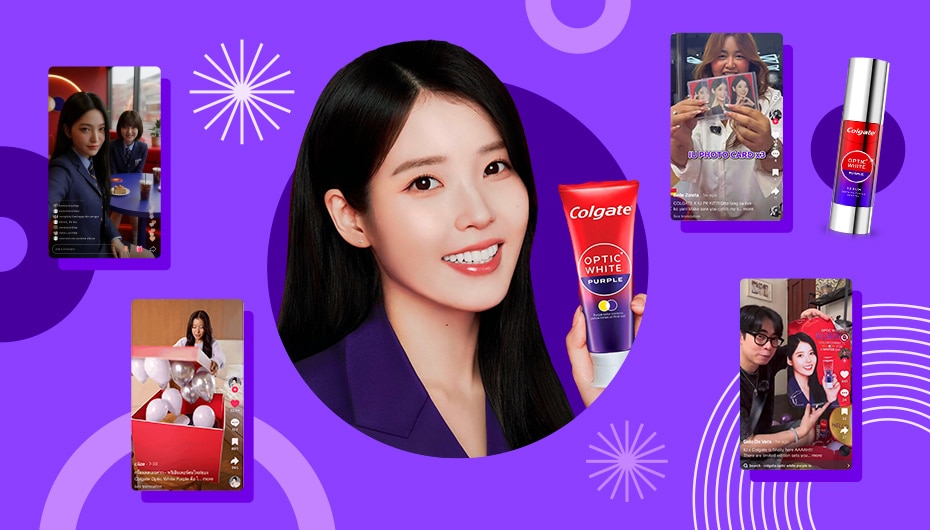
When Colgate-Palmolive launched Colgate Optic White Purple Teeth Whitening Toothpaste across the Asia-Pacific market, it skipped the traditional marketing playbook, instead building the launch directly inside the social platforms where its consumers already live. “Our content has to have this ‘stopping power’ in order to drive the conversation,” says Janejira Champaiboon, Director, Customer Development, Emerging Retail Environments at Colgate-Palmolive. “And I think that’s the starting point of what we call a social-first go-to-market.”
Thinking Outside the Traditional Marketing Funnel
For decades, marketers relied on a predictable sequence: build awareness, encourage consideration, drive purchase and cultivate loyalty. But social platforms have fundamentally changed that journey. Consumers now move fluidly between discovery, research, entertainment, advocacy and purchase — often within a matter of minutes. A creator’s product review may lead directly to a purchase through social commerce like TikTok Shop, or a customer may instantly become a brand advocate by sharing their unboxing video. This holds especially true of Gen Z and Gen Alpha audiences.
“It is very important that we have the younger consumers as our primary targets,” says Angela Yang, Senior Marketing Manager at Colgate-Palmolive, of the conscious decision to include this audience.
Recognizing this shift, Colgate-Palmolive mapped the Colgate Optic White Purple launch to a loop of continuous engagement, in which every piece of content was designed to fuel a new opportunity for discovery, conversation or purchase.
Making Teeth Whitening Feel Culturally Relevant
To make teeth whitening feel culturally relevant, Colgate recognized that understanding culture is just as critical as understanding consumer behavior. The campaign focused on people who view personal care as an expression of confidence and identity and who actively follow popular Korean beauty trends.
To connect with this audience for the launch of Colgate Optic White Purple, Colgate partnered with Korean superstar IU, a cultural icon and renowned symbol of K-Beauty.
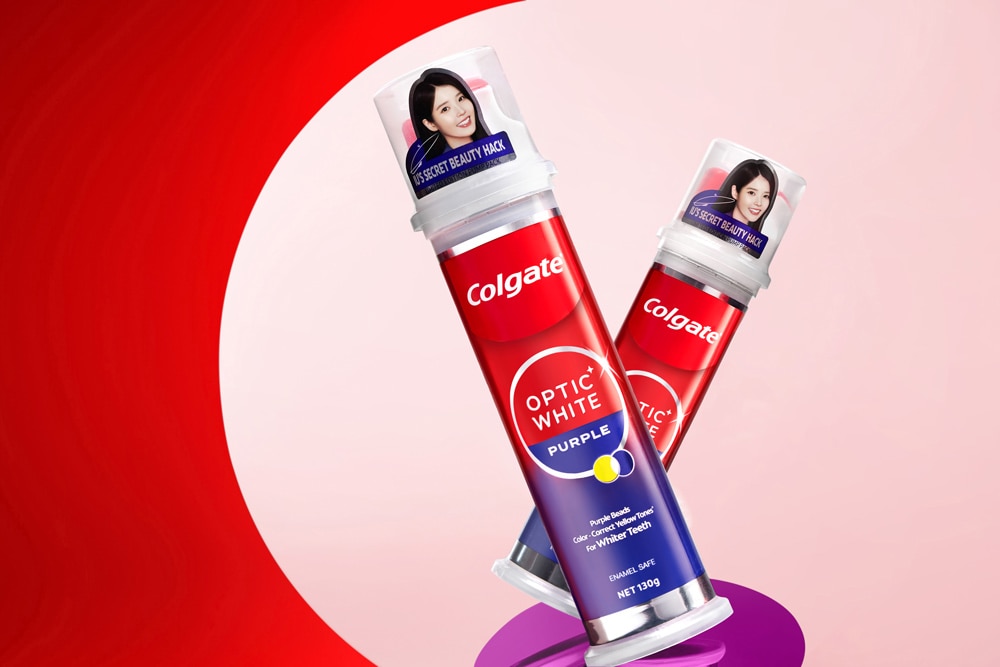
“How do we build relevance within the K-Beauty space? Let’s look at what consumers are most interested in — which is skin care,” says Callista Fernandez, Marketing Director at Colgate-Palmolive. “So, IU came in and revealed Colgate Purple as her top beauty hack — for her teeth.”
By positioning teeth whitening as an essential step in a modern K-beauty ritual, the campaign helped consumers view the product as a daily beauty upgrade rather than just standard oral hygiene.
What Makes a Social-First Marketing Campaign Different?
Colgate-Palmolive’s flagship campaign was built around Korean beauty culture and high-profile partnerships. Then, there are highly shareable demonstrations explaining the product through beauty hacks, color theory and educational content that feels native to social platforms. Finally, thousands of pieces of influencer- and consumer-generated content extended the campaign even further. Rather than looking like polished advertisements, this content reflected the authentic voices and styles consumers expect from the creators they follow every day.
With this campaign, the brand has built a layered content ecosystem capable of generating continuous engagement — because a social-first marketing campaign doesn’t begin with a television commercial shoehorned into a social media format. Instead, social platforms are the starting point. Together, these layers created an ongoing conversation, with fresh creator and consumer content continually extending the campaign beyond launch.
Turning Marketing into Entertainment with The Purple Café
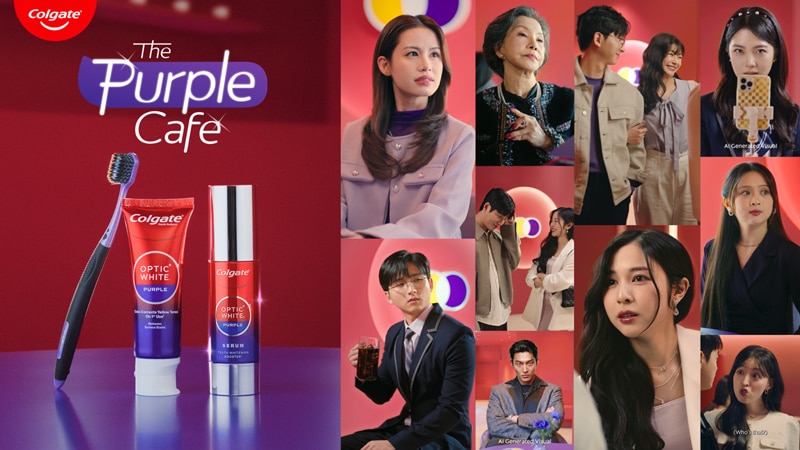
Perhaps the Optic White Purple campaign’s most innovative element was The Purple Café — a six-part TikTok series inspired by Korean dramas. Rather than traditional ads, Colgate created an episodic narrative featuring prominent influencers from across Asia-Pacific as recurring characters.
Within the series, Colgate Optic White Purple wasn’t simply shown on-screen — it became a core plot device, helping characters navigate awkward social encounters and gain confidence as relationships developed.
“We recognize that the way people consume media and content has dramatically changed, especially on TikTok,” says Samir Singh, President, Enterprise Oral Care, Colgate-Palmolive. “Our campaign takes our association with Korean beauty and culture to a whole new level, presenting our product not just as a beauty essential but as a pivotal character that transforms our influencer protagonists’ confidence.”
By embedding the product into the storyline, Colgate blurred the line between branded content and entertainment in a way that left viewers wanting more.
Making Consumers Part of the Story
In addition to episodic video, Colgate embraced elements of AI to turn passive viewers into active co-creators.
The initiative aims to democratize storytelling while highlighting the role of human creativity in shaping digital narratives. In a TikTok-exclusive activation, The Purple Café introduced AI-generated antagonists designed to create narrative conflict. Viewers were invited to respond by writing and filming their own storylines — effectively using human creativity to “one-up” the AI villains.
This interactive mechanic shifted audiences from passive viewers to active participants, encouraging community participation, conversation and repeat engagement.
What Role Does Social Commerce Play in Modern Product Launches?
Discovery has become increasingly inseparable from purchase. To capitalize on this, Colgate integrated TikTok Shop directly into the campaign ecosystem across key APAC markets, including the Philippines, Thailand, Malaysia and China.
Creators, livestreamers and affiliates became an extension of the campaign, allowing consumers to move seamlessly from inspiration to purchase without interrupting their experience. Rather than treating commerce as the final step in marketing, the campaign embedded purchasing opportunities naturally throughout the experience.
What Does the Colgate Purple Campaign Reveal About the Future of Marketing?
The Colgate Optic White Purple launch demonstrates how global brand-building is rapidly evolving. Today’s audiences expect stories rather than slogans, platform creators rather than traditional spokespeople and experiences that invite participation.
By combining social-first thinking, creator partnerships, social commerce, episodic storytelling and interactive AI, Colgate-Palmolive created a campaign that functioned less like a product launch and more like a living digital community — providing a roadmap for future brand activations across 2026 and beyond. The Colgate Optic White Purple campaign offers a glimpse of a future where innovation is measured not simply by what consumers buy, but by how they discover, experience, share and shape the stories behind the brands they love.