


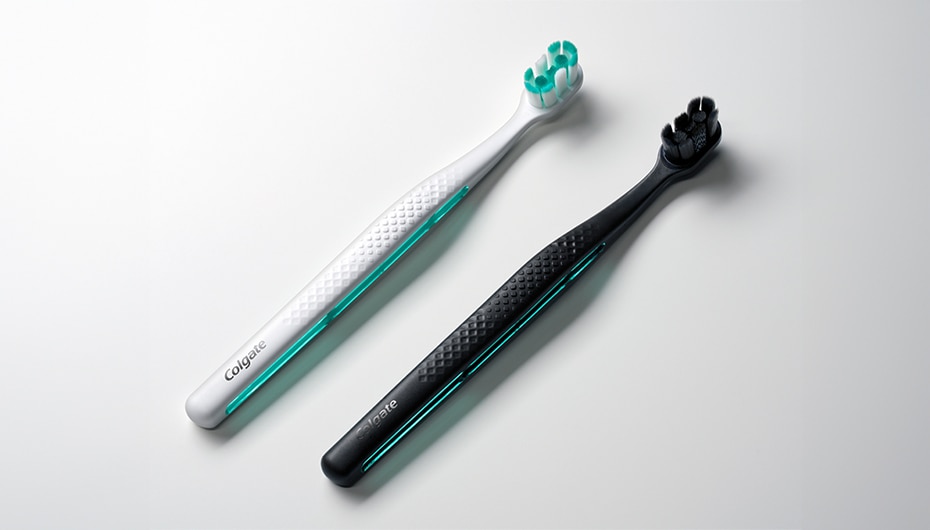
For more than two centuries, Colgate-Palmolive has worked toward perfecting the toothbrush — an object most people replace without a second thought.
Inside Colgate-Palmolive, industrial designers, R&D scientists and dentists work in a space most consumers never see, on a problem most consumers never consider. But bristle geometry, paste chemistry, sustainable materials and manufacturing scale are all in service of a simple goal.
"The end goal is to make more smiles," says Daniel Wainless, a Senior Industrial Designer at Colgate-Palmolive.
How is a toothbrush designed?
Designing a toothbrush starts with behavior, not aesthetics.
The American Dental Association recommends brushing twice a day with a fluoride toothpaste, which means a toothbrush has to hold up to repetition without being abrasive. By understanding not just what people say they want, but how they actually use the product and where unmet needs exist, Colgate-Palmolive can identify what a better toothbrush actually looks like.
The design process moves from initial sketches and concepts to digital models and eventually to physical toothbrush prototypes that are tested and improved through home-use trials with consumers. At the same time toothbrush design is being considered, designers and chemistry teams are working in sync to look for cases where a brush design can amplify the benefit a paste is engineered to deliver.
Wainless describes his role as less about design aesthetics and more about connecting research, science and user needs into a single product. "It's taking all of these amazing trends, research and science that is out in the field, putting that all together, and really trying to create the future of oral care,” Wainless says.
For Takahide Okai, a Senior Technical Associate at Colgate-Palmolive, the motivation is straightforward. "With billions of toothbrushes sold annually, I get to help billions of people achieve a healthier smile."
What is the latest toothbrush technology?
The toothbrush has been around longer than most people realize. For much of its history, it looked very different from what's in your bathroom today.
Until plastic was invented, handles were typically carved from cattle bone and bristles were made from animal hair. The mass-produced plastic toothbrush that became a global standard was itself a technological leap, but what Colgate-Palmolive is working on now is the next step in toothbrush technology: high-density bristle toothbrushes.
"Toothbrushes and toothpaste are really a system," says Wainless. "What we're doing [with] toothbrushes is really tweaking the bristles' configuration, shapes and spacing to really enhance the toothpaste delivery and deliver actives of that toothpaste into different areas of your mouth."
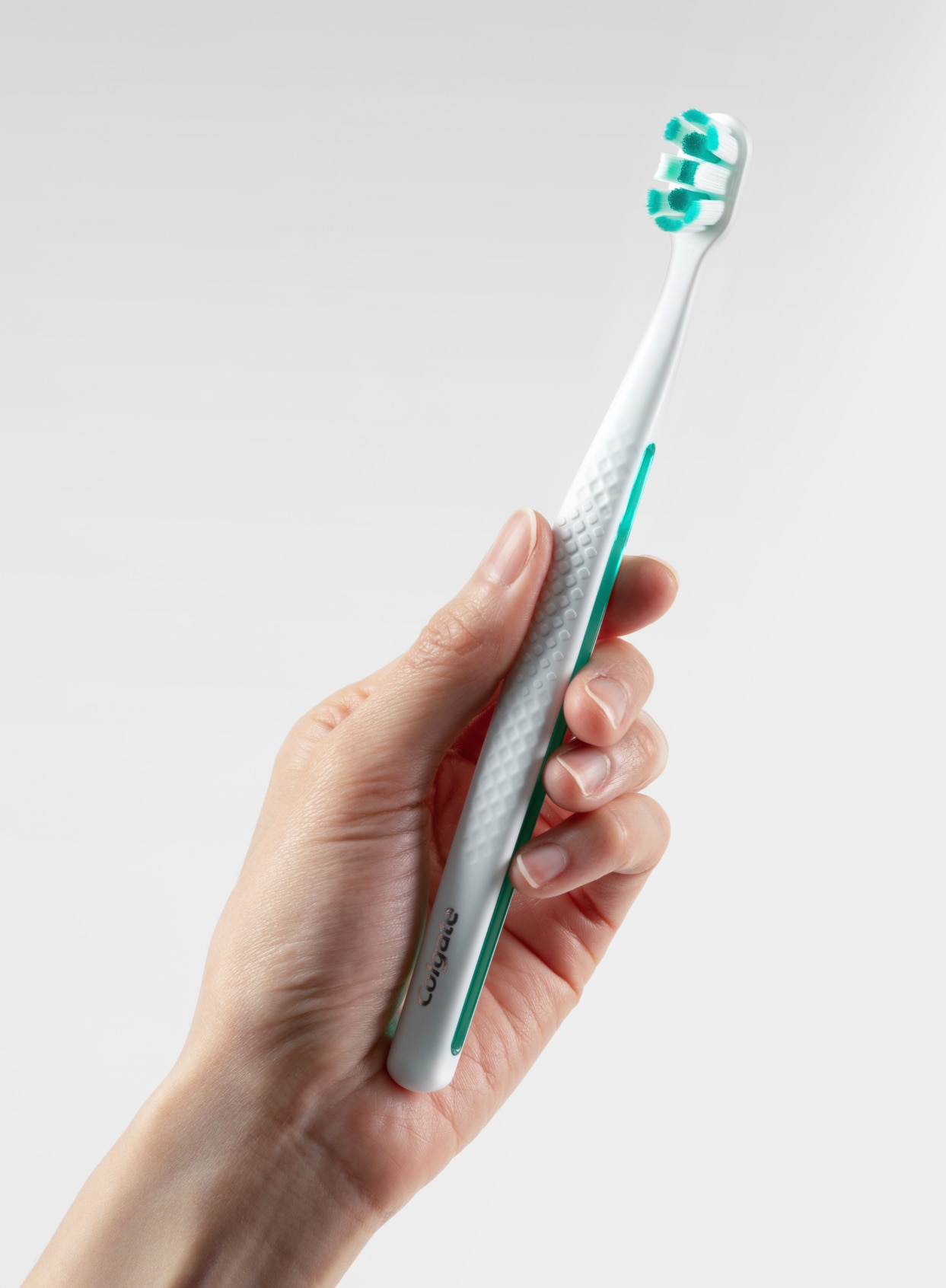
The Colgate Total Active Prevention Foaming Clean Toothbrush puts that system into practice. Compared to the Colgate Extra Clean Toothbrush, it features 2x more high-density Floss-Tip bristles—over 5,000 in total—designed to reach deeper along the gumline and between teeth. Rapid foaming action enhances toothpaste coverage across the mouth, while stain-polishing center pads help remove surface stains.
The design has also been recognized externally, earning a 2024 Good Design Award, a Top Toothbrush designation from Good Housekeeping’s Beauty Innovation Awards, and Best Manual Toothbrush in Esquire’s Grooming Awards.
Are toothbrushes bad for the environment?
Colgate-Palmolive’s primary manufacturing facility in Yangzhou, China produces approximately 1 billion toothbrushes per year and is always focused on rethinking packaging, materials and product design from the ground up to make toothbrushes more sustainable.
Beginning in 2025, Colgate-Palmolive introduced recyclable paper-based packaging for its manual toothbrush line, transitioning away from traditional plastic packaging. Colgate-Palmolive also pioneered a first-of-its-kind recyclable toothpaste tube — made from high-density polyethylene, the same plastic used for milk jugs — which can be tossed directly into standard recycling. Colgate-Palmolive has transitioned approximately 97% of its toothpaste SKUs in North America and 98% of its toothpaste SKUs globally to the recyclable tube. We now sell our recyclable tube in over 70 countries worldwide.
On the brush itself, materials research is active: bamboo and recycled PET — plastic reclaimed from water bottles — have already been used or are under development, alongside what Wainless describes as "the next generation of bio-based, sustainable materials."
1 Your community may not yet accept tubes for recycling. Check locally. Learn more at www.colgate.com/goodness.


