



Fluoride toothpaste has been an integral part of daily oral-care routines for more than half a century. This natural mineral has been extensively studied for its safety and effectiveness as a cavity-fighting tool, and has long played a major role in global health. With tooth decay as the most common disease in the world — the World Health Organization estimates oral disease affects 3.7 billion people globally, with 2.5 billion people having untreated cavities — fluoride has been one of the primary means for supporting healthier mouths since the 1950s. Although it's one of the most trusted active ingredients in oral care, fluoride is still often misunderstood.
We spoke with Colgate-Palmolive’s team, including its Chief Clinical Officer and a toxicologist, about what the science actually shows.
What is fluoride?
Fluoride is a naturally occurring mineral found in water, soil and rocks, that helps protect teeth from cavities and rebuild weakened tooth enamel.
More than a century ago, dentists in the American West noticed that people in certain communities had unusually strong teeth that proved resistant to decay. Decades of study traced the reason back to fluoride naturally present in the local water.
“Fluoride has since become a widely trusted tool for fighting cavities”, adds Dr. Maria Ryan, Executive Vice President and Chief Clinical Officer, Colgate-Palmolive. “Based on years of research and clinical studies supporting the safety and effectiveness of fluoride for cavity prevention, fluoride has been added to toothpastes throughout the world for decades in various forms,” Ryan says.
What is the root cause of cavities, and how does fluoride protect our teeth from getting them?
The plaque on your teeth contains bacteria that feed on sugar and produce acid, which wears away at your enamel, the hard outer layer of your tooth. Your saliva naturally repairs small amounts of this wear throughout the day, but when the wear outpaces the repair, it can eventually lead to a cavity. Fluoride helps repair and strengthen your enamel, while also reducing bacteria’s ability to create cavity-producing acid.
Cavities happen when acid-producing bacteria wear down tooth enamel faster than your saliva can naturally repair it, and fluoride helps to strengthen your enamel, making it more resistant to these acids.
“Cavity protection comes from the presence of an anticavity active ingredient in your toothpaste,” Ryan says. “In the United States, fluoride compounds are the only anticavity active ingredients approved by the Food and Drug Administration (FDA).”
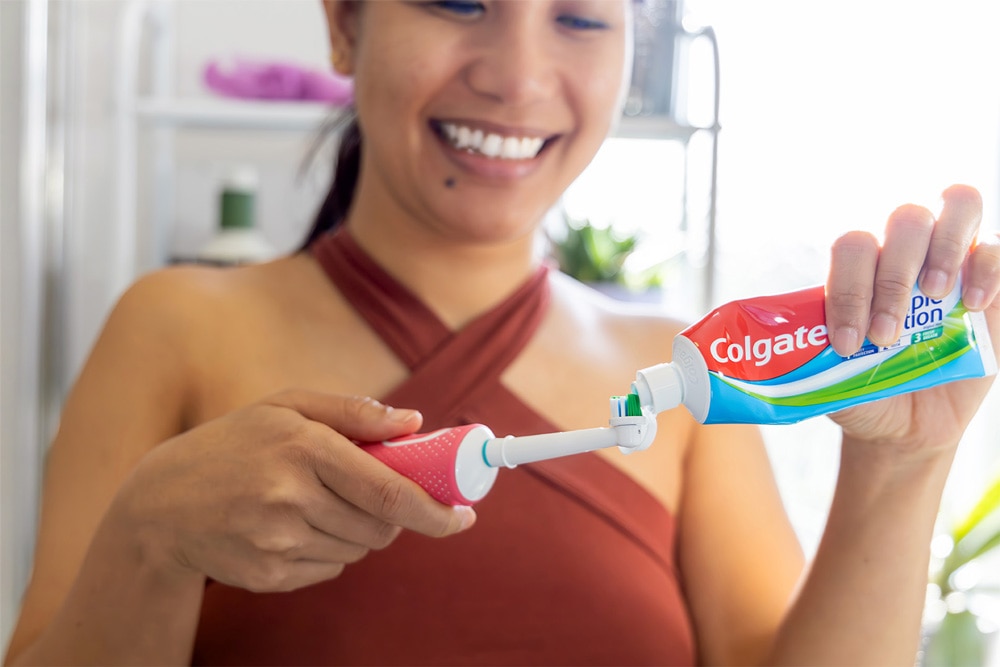
How does fluoride toothpaste help fight cavities?
Fluoride toothpaste helps fight cavities in three ways:
It enhances remineralization, helping repair weakened areas of enamel.
It slows demineralization and helps make the repaired enamel more resistant to future acid attacks by bacteria
It interferes with bacterial metabolism, reducing the bacteria’s ability to produce cavity-causing acids.
The National Institute of Dental and Craniofacial Research (NIDCR) notes that fluoride toothpaste can even reverse the earliest signs of tooth decay, before a cavity fully forms. A major review of 70 clinical trials involving more than 42,000 children backs this up: finding that fluoride toothpastes reduce the development of new cavities by about 24 percent compared to toothpastes without fluoride.
“Fluoride toothpaste helps to prevent cavities and to rebuild — or remineralize — weakened enamel,” Dr. Ryan says. “Longstanding research shows that brushing at least twice a day for 2 minutes with a fluoride toothpaste works better than once a day.”
Is fluoride toothpaste safe? How much fluoride in toothpaste is safe?
Fluoride toothpaste is safe when used as directed. In the United States, fluoride toothpaste is regulated as a drug under the Food and Drug Administration’s Over-the-Counter Monograph for Anti-Caries Drug Products. Colgate’s anticavity toothpastes in the United States contain about 1,100 parts per million fluoride, consistent with FDA requirements based on decades of safety and efficacy research.
“How much fluoride you are exposed to is key to determining safety,” says Dr. Daniella Urbach-Ross, Senior Director of Global Product Safety at Colgate-Palmolive. “Fluoride levels found in toothpastes throughout the world have been evaluated and deemed safe by expert toxicologists at Colgate-Palmolive and by regulatory bodies worldwide when used as directed. Warnings like those seen on large industrial quantities of materials that have been circulating online are common across foods, drugs and cosmetics”.
Should both kids and adults be using fluoride toothpaste?
Yes, but be mindful of how much you should use. For children under two, we recommend asking a dentist or doctor before use. At that age, the right answer depends on the child. For children ages two to six, use a pea-sized amount of fluoride toothpaste, applied twice a day, with an adult supervising.
For adults, brushing twice a day for 2 minutes with a fluoride toothpaste, along with flossing and a diet lower in sugar, is the everyday routine recommended by the ADA and the World Health Organization (WHO).
When used as intended, fluoride remains one of the simplest, most well-supported ways to protect your family’s oral health.